Baby Elephant Swept Away by the River
It started like any other afternoon at the river.
The herd had walked for hours under the heat. Eleven elephants, maybe twelve. The adults moved slowly, heavy and patient. The little ones ran ahead the way little ones always do.
One of them was barely a few months old. Small enough to walk under his mother’s belly. Curious enough to get into trouble.
The river was higher than usual. Rain upstream had turned it brown and fast. The adults knew it. They stopped at the edge, tested the water with their trunks, and began drinking from the shallows.
The baby did not stop.
One Step Too Far
He walked into the water like it was a game. One step. Two steps. The mud under his feet was soft and slippery.
Then the ground simply disappeared.
In a single second, the current grabbed him. His legs kicked at nothing. His head went under, then came back up, then went under again. The river was pulling him away from the bank faster than anyone could believe.
His mother screamed.
If you have never heard an elephant in distress, it is a sound that goes straight through your chest. Deep, loud and desperate. Every elephant in the herd froze and turned toward her.
What happened next took less than three minutes.
The Herd Moves as One
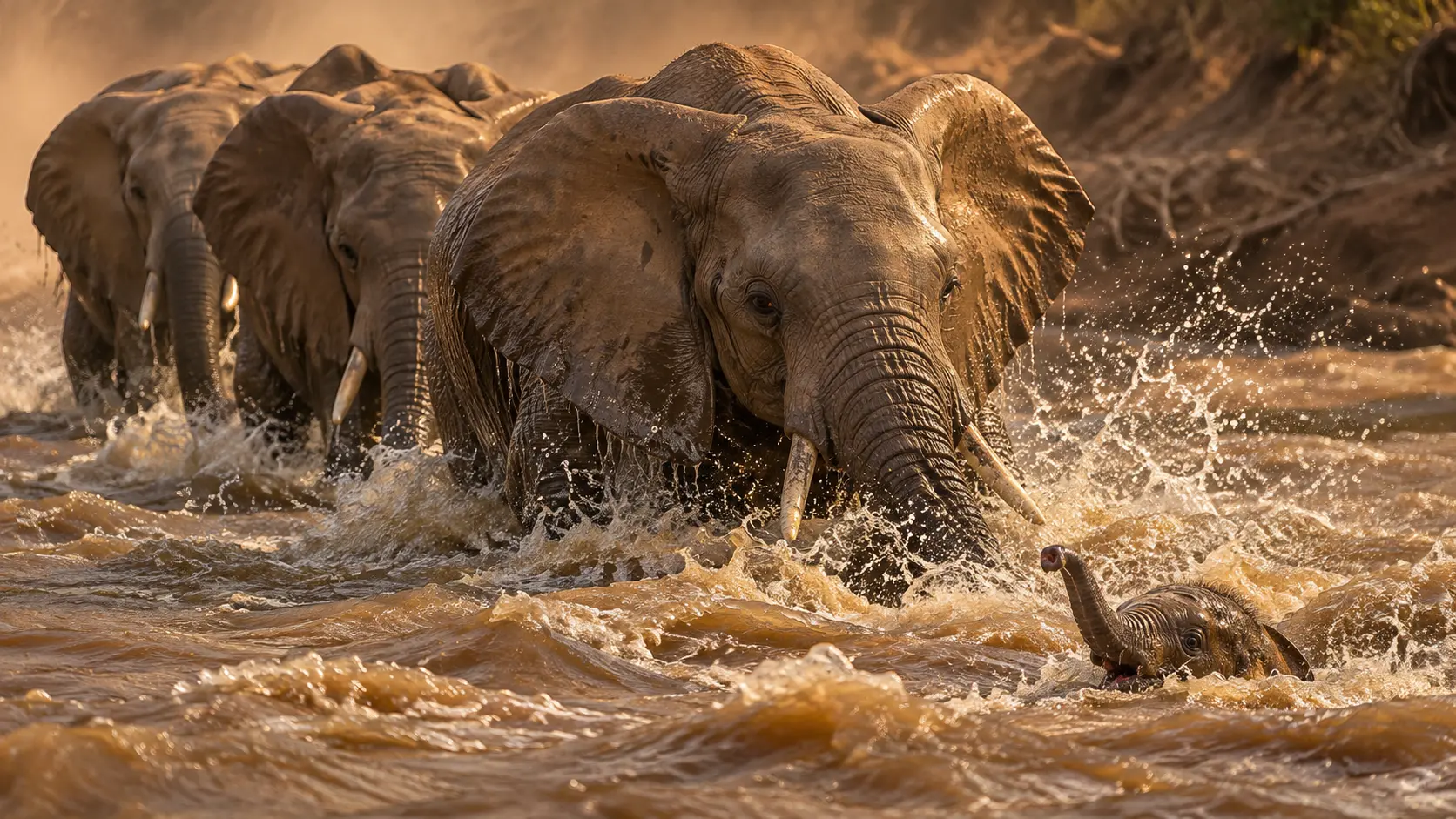
The mother charged into the water first. But she was not alone for long.
The oldest female in the herd, the matriarch, was right behind her. Two more adults followed. They did not run in randomly. They moved into a line, shoulder to shoulder, angling their huge bodies against the current.
They were building a wall.
The water slammed against their sides and split around them. Downstream of that living wall, the river suddenly became calmer. Slower.
The baby, still tumbling, drifted straight into that calmer pocket.
The matriarch lowered her head. Her trunk wrapped under the baby’s body. The mother pushed from the other side. Together, they lifted his head above the surface. Not for a second did they let go.
The Walk Back
Getting into the river was the easy part. Getting out was harder.
The bank was steep and muddy. The baby was exhausted and could not climb. The adults kept him pinned between their bodies so the current could not take him again.
Then they did something remarkable.
The matriarch climbed out first and turned around. She reached down with her trunk while the mother pushed the baby from behind, using her forehead. Inch by inch, they slid him up the slippery bank.
The moment his feet touched solid ground, he collapsed. For a long, frightening moment, he did not move.
The herd surrounded him completely. Trunks touched his face, his ears, his back. His mother rumbled softly, a low sound you could feel more than hear.
And then the baby stood up.
Wobbly. Soaked. Covered in mud. But alive.
Why Elephants Do This
What looked like a miracle is actually something elephants are known for.
Elephant herds are family groups, usually led by the oldest and most experienced female. Every adult in the herd helps raise the young. Researchers who study elephants describe this as shared care. The calf does not belong only to its mother. It belongs to everyone.
The matriarch’s experience matters most in moments like this. She has likely crossed that river dozens of times. She knows where the water is deep, how the current moves, and how to use the bodies of the herd to break its force.
The “wall” the adults formed was not luck. It was knowledge, passed down over years.
The Moment Everyone Remembers
After the rescue, the herd did not leave right away.
They stayed by the river for nearly an hour. The baby nursed. The adults dusted themselves and him with dry earth, a natural way to protect skin from the sun.
Then, just before they walked away, the baby did something that made everyone smile.
He walked back toward the water.
This time, his mother simply stepped in front of him. She did not push. She did not scold. She just stood there, a gentle grey wall between her son and the river.
He looked at her for a moment. Then he turned around and followed the herd home.
Some lessons only need to be learned once.
If this story moved you, share it with someone who believes family always comes first.