The Waitress and the Old Man’s Coffee
The old man always came in at 6:15.
He sat in the same booth, the one by the window with the small crack in the red seat. He wore the same brown coat, even in summer. He always ordered the same thing.
“Black coffee and one slice of toast, please.”
Never eggs. Never pancakes. Just coffee and toast.
Emma noticed him on her very first week at the diner. She was twenty-two, working early shifts to pay for night classes. She noticed how he counted his coins carefully on the table. How sometimes he came up a little short and quietly asked her to take the toast back.
One morning, she did not take it back.
The Secret
“It’s already taken care of,” she told him.
He looked confused. “By who?”
Emma just smiled and walked away.
The next day, she did it again. And the day after that. She paid for his coffee and toast from her own tips, about four dollars every morning. Sometimes she added a fried egg and said the kitchen made an extra by mistake.
She never told her manager. She never told her coworkers. When the old man asked who was paying, she always said the same thing.
“Someone who thinks you deserve a good breakfast.”
His name, she learned, was Henry. He was eighty-one. His wife had passed away three years earlier. He did not have any family nearby. The diner, he said, was the only place where someone said good morning to him.
Six Months of Mornings
It became their routine.
Henry would tell her stories about the old days. About the factory where he worked for forty years. About the first time he saw his wife, at a dance hall, wearing a yellow dress.
Emma told him about her classes. She was studying to become a nurse. She talked about how hard it was to work, study and pay rent at the same time.
Henry always listened closely. He asked questions. He remembered everything she said.
Then, one Monday in March, he did not come in.
The Empty Booth
Emma kept looking at the door. 6:15 came and went. Then 6:30. Then 7:00.
He did not come on Tuesday either. Or Wednesday.
By Friday, she was worried sick. She did not have his phone number. She did not even know his last name.
The following Monday, the bell above the door rang at 6:15.
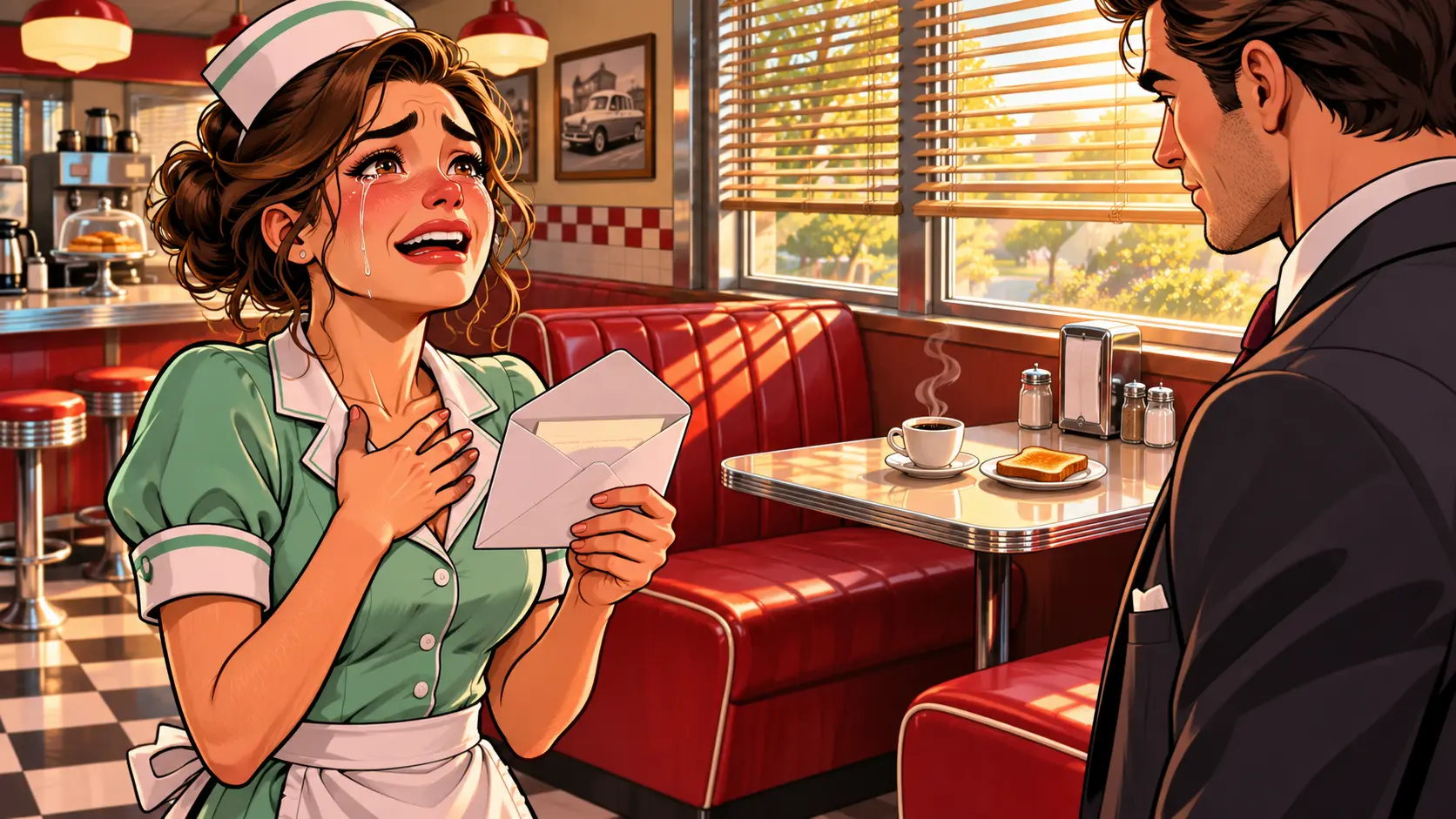
Emma looked up so fast she almost dropped a plate. But it was not Henry. It was a middle-aged man in a suit, holding a white envelope.
He walked straight to the counter and asked, “Is there a waitress here named Emma?”
The Envelope
The man introduced himself as Henry’s nephew.
He told her, gently, that Henry had passed away peacefully in his sleep the week before. He had not been in pain.
Emma had to sit down.
“He talked about you,” the nephew said. “Every time I called him. He said there was a girl at the diner who paid for his breakfast every day and thought he didn’t know. He knew. He always knew.”
He handed her the envelope. Her name was written on the front in shaky handwriting.
Inside was a letter. And a check.
What the Letter Said
The letter was short.
Dear Emma,
You never let me thank you, so I am doing it this way. For six months you made an old man feel like somebody was glad to see him. That is worth more than any breakfast.
You told me you want to be a nurse. The world needs more people with your kind of heart taking care of it. Please use this for school. Don’t argue. I can’t hear you anyway.
Thank you for the coffee. — Henry
The check covered her remaining tuition. All of it.
Emma read the letter three times. Then she put her face in her hands and cried in the middle of the breakfast rush. Nobody at the diner said a word. A few customers who knew Henry quietly came over and put a hand on her shoulder.
Paying It Forward
Emma graduated from nursing school the next year. She works night shifts at a hospital now.
But every Saturday morning, she still goes back to the diner. She sits in the booth by the window, the one with the small crack in the red seat.
And whenever she sees someone counting coins at the counter, she quietly tells the waitress the same words.
“It’s already taken care of.”
Small kindness is never small to the person receiving it. Share this story if you believe in paying it forward.